The annual State of the Union address by the US President is an obligation embedded in the nation’s constitution. It offers the President the chance to publicly articulate the major issues facing the country, lay out the legislative agenda for the year ahead, and offer a broader vision for the nation’s future.
It has been a tough first year for US President Joe Biden. His public approval has flagged since the debacle of America’s withdrawal from Afghanistan. And while he had some early success in getting through Congress further COVID-19 financial support, and a $US1 trillion infrastructure program, his domestic agenda has stalled on most other fronts.

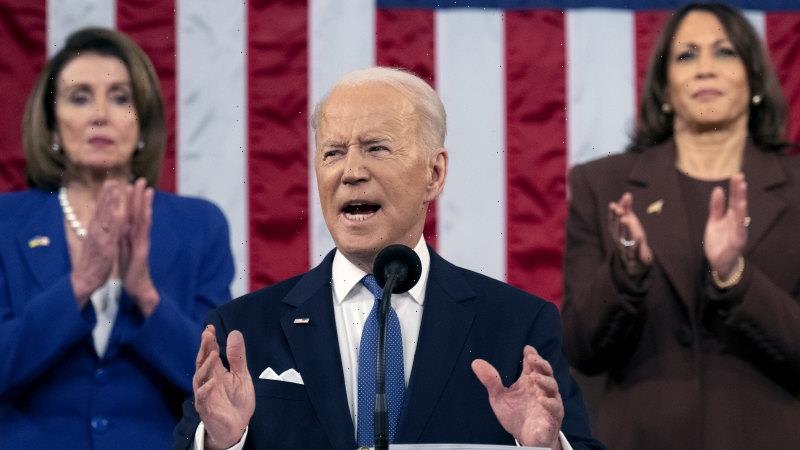
President Joe Biden delivers his State of the Union address with Vice-President Kamala Harris and House Speaker Nancy Pelosi.Credit:AP
When Mr Biden took office, he vowed that after years of division it was time for bipartisanship to make a comeback. Mr Biden’s State of the Union speech put on show the mixed success he has had in bringing the opposing sides of American politics together.
It started off well, with his emphatic commitment to punishing Russian President Vladimir Putin for his bloody invasion and backing the incredible courage Ukrainians have shown in the face of a far stronger power. Defending democracy and freedom has been a touchstone issue in America for decades and while on this occasion it is being done via sanctions and not troops, it has the strong backing of the public and both sides of politics.
But once Mr Biden moved on from Ukraine, the division and disputes that have plagued American politics quickly resurfaced. The President has a long shopping list of legislation that has been stalled by not only Republicans but some within his party. He spent much of his speech pleading with Congress to take another look at reforming voting rights, banning assault weapons, setting a global minimum tax rate, raising the minimum wage to $15 an hour, allowing workers to unionise and lowering pharmaceutical costs and more. He was mostly met with stony silence from Republicans.
And while he spruiked the good economic news that more than 6.5 million new jobs were created in the past year and GDP grew by 5.7 per cent during the same period, he also had to face the economic elephant in the room – inflation. It has skyrocketed in America, driven by supply chain issues, higher energy prices and pent-up demand from consumers with big bank accounts built up during the pandemic.
Not all thorny issues got a mention. In a reflection of how quickly the world can change, the American President mentioned Russia 18 times, and China only twice, Afghanistan was barely discussed, and only in relation to returning American troops. The ongoing nuclear negotiations with Iran were not even broached.
On the domestic front, there were two glaring omissions. Mr Biden’s Build Back Better, once touted as a once-in-a-generation investment that included everything from free universal preschool for children, free community college, 12 weeks of paid family leave and a range of climate incentives has disappeared from his agenda. And, most disappointingly, climate change was only touched upon twice. When Mr Biden rejoined the Paris Agreement on Climate Change, there was hope that America would lead a renewed global push for a faster reduction in carbon emissions. In the face of domestic opposition, that is now very much in doubt.
Mr Putin’s brutal assault on a democratic nation has galvanised America and helped invigorate alliances that were damaged by the Trump administration. But on the domestic front, the divisions are as entrenched as they were when Mr Biden took over. Bipartisanship may be his wish, but the union of America is far from united.
Gay Alcorn sends an exclusive newsletter to subscribers each week. Sign up to receive her Note from the Editor.
Most Viewed in World
Source: Read Full Article