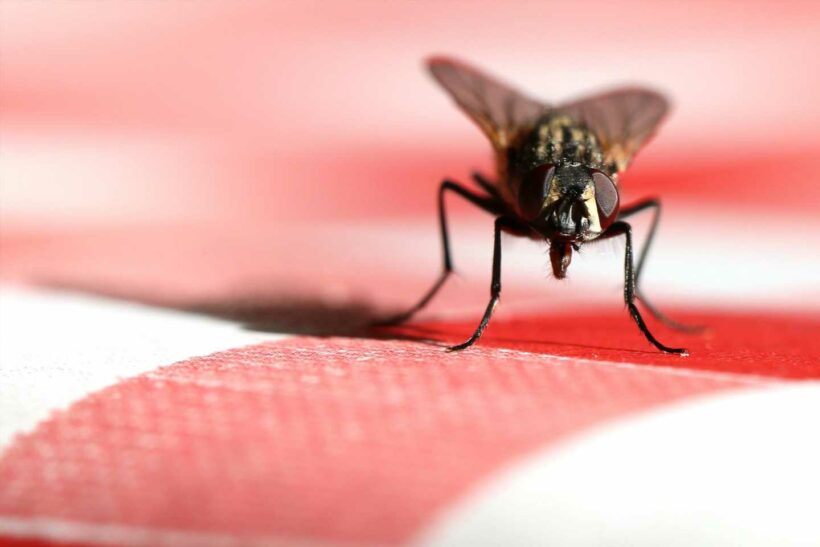
BRITS are being warned not to kill flies, wasps and bees this summer as numbers rapidly decline.
Flying insect numbers have plunged by 65 per cent in England over the last 20 years, a new study has shown.

Members of the public were asked by Buglife and the Kent Wildlife Trust to count the number of insects splatted against the number plates on their cars.
The results were then compared it to a similar study from 2004.
The conservation charities found counts were down the most in England, where 65 per cent fewer insects were recorded, and the least in Scotland, which recorded a 28 per cent fall.
Paul Hadaway, the director of conservation at Kent Wildlife Trust, said: "The results from the Bugs Matter study should shock and concern us all.
Read More News

I’m a gardening expert – the four natural ways to keep cats out of your garden

I’m a gardening expert – 9 mistakes you want to avoid when starting your garden
"We are seeing declines in insects, which reflect the enormous threats and loss of wildlife more broadly across the country.
"These declines are happening at an alarming rate and without concerted action to address them we face a stark future. Insects and pollinators are fundamental to the health of our environment and rural economies."
He added: "We need action for all our wildlife now by creating more and bigger areas of habitats, providing corridors through the landscape for wildlife and allowing nature space to recover."
It may be tempting to solve bug infestations at home with traps, fly swats and sticky paper, but simply shooing them outside is the better option.
Most read in News
DARK TAUNTS 
I was bombarded with sinister death threats after finding Flight MH370 wreckage

Earthquake hits UK as houses and ground shake during 3.8 tremor

Shock moment eco-warrior disguised as old woman smears CAKE on Mona Lisa

Sisters stab paedo dad after he 'raped them & forced them to dig own graves'
Those with a garden can set up an insect house outside, while sticking to real grass rather than astro turf, Yorkshire Live reports.
Other tips include mowing the lawn less regularly to provide a home for more bugs, and creating log piles for beetles to chow down on.
According to the Natural History Museum, as much as 40 per cent of the world's species could become extinct in the next few decades, including bees, ants and butterflies.
It states: "These insects represent some of the most significant pollinators of plants.
Read More on The Sun

I’m Britain’s nosiest neighbour – I’m called intrusive but I don’t care

How to tell the difference between chickenpox and monkeypox
"While plants are pollinated in many different ways, insect-pollinated crop plants such as apples, pears, cucumbers, watermelons and almonds, will become significantly less productive without pollinators, and could fail altogether.
"The impact of insect loss goes far beyond our food supplies, however, as animals such as birds which depend on them for food will also be hit."
Source: Read Full Article